
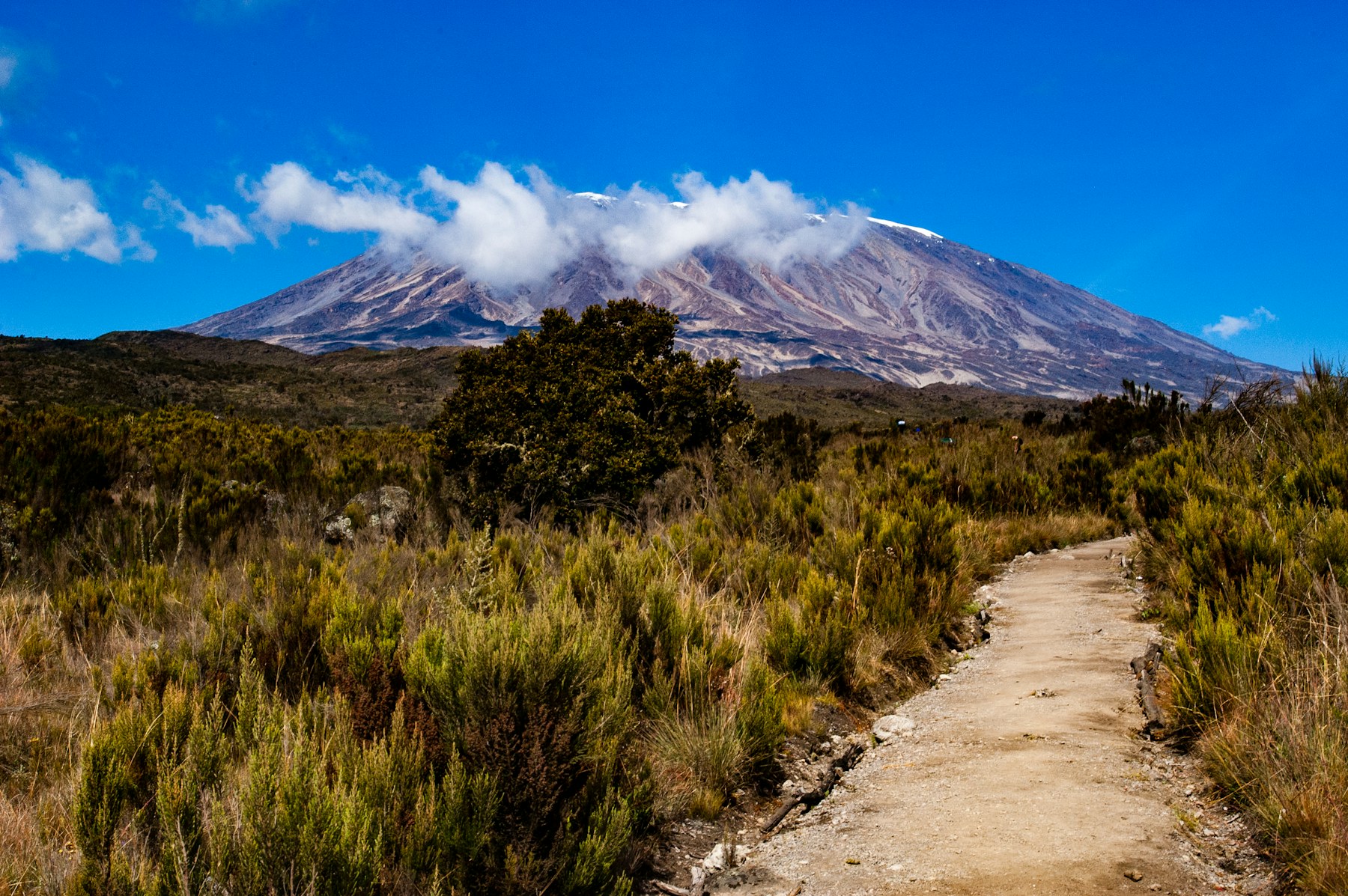
Mount Kilimanjaro is one of the world’s great non-technical high-altitude trekking objectives: a volcanic massif in northern Tanzania that rises to 5,895 meters (19,341 feet) at Uhuru Peak. You do not need ropes, ice axes, or technical climbing skills on the standard trekking routes, but that does not make Kilimanjaro easy. The challenge comes from altitude, consecutive days of hiking, rapidly changing conditions, cold, limited recovery, and a very long final summit push.
Kilimanjaro at a Glance
| Country | Tanzania |
|---|---|
| Highest point | Uhuru Peak, 5,895 m / 19,341 ft |
| Mountain type | Volcanic massif with Kibo, Mawenzi and Shira |
| Technical climbing required? | No on the standard trekking routes |
| Typical mountain time | About 5–9 days depending on route and itinerary |
| Primary gateway | Kilimanjaro International Airport (JRO) |
| Main climber bases | Moshi and Arusha |
| Guide required? | Yes. TANAPA requires climbs to be conducted through licensed operators. |
Kilimanjaro National Park is a UNESCO World Heritage Site, and the mountain is distinctive not just for its height but for its isolation above the surrounding plains. The climb passes through several ecological zones, beginning with cultivated foothills and montane forest and continuing through heath and moorland, alpine desert, and the high summit zone. That progression is part of what makes the mountain feel like an expedition even though the standard routes are non-technical.
Where Kilimanjaro Is
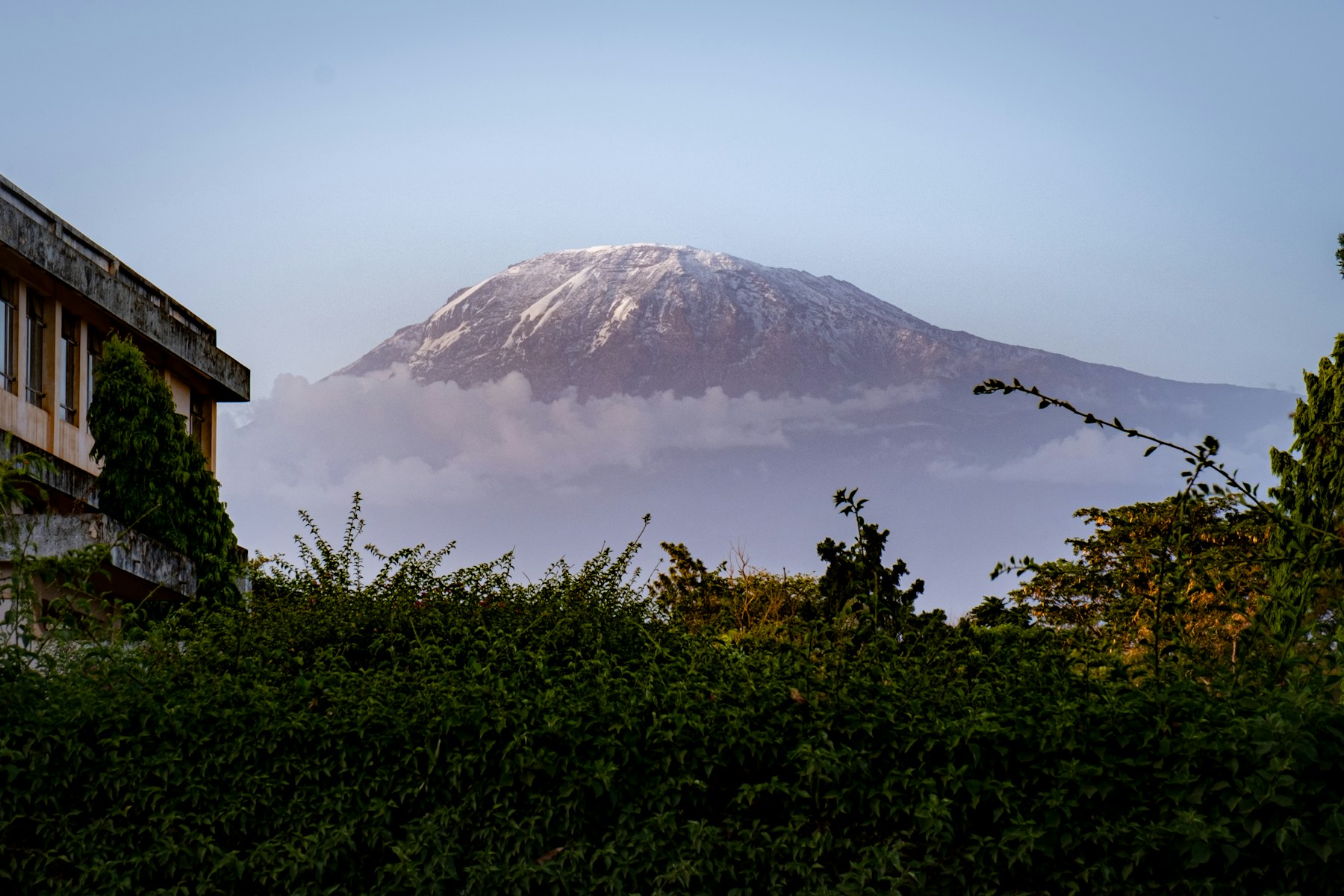
Mount Kilimanjaro is in northern Tanzania near the Kenyan border, northeast of the city of Arusha and north of Moshi. Most international climbers arrive at Kilimanjaro International Airport, commonly known by its airport code JRO. Your climbing operator will normally arrange airport transfers, pre-climb lodging, the transfer from your hotel to the trailhead, and the return transfer after the mountain.
Moshi is the most mountain-focused base. It sits on Kilimanjaro’s southern side and is close enough that the mountain can dominate the skyline when weather is clear. Arusha is larger and is a major center for northern Tanzania safari operations. Many itineraries use Moshi before the climb and transition toward Arusha, Tarangire, Ngorongoro, or the Serengeti afterward.
Choosing a Kilimanjaro Route
Route choice is one of the first decisions people obsess over, but it is better to think about the itinerary than the route name alone. A route can be sold in multiple lengths, and an extra day can materially change the acclimatization profile. TANAPA currently identifies six main climbing trails, while the travel industry also commonly markets route variants such as the Northern Circuit and Crater Camp combinations.
The major options include:
- Lemosho: scenic western approach, usually offered with enough days to build a good acclimatization profile.
- Northern Circuit: a longer itinerary that traverses the quieter northern side of the mountain before the summit approach.
- Machame: popular southern route with varied scenery and a climb-high/sleep-low profile on common itineraries.
- Rongai: approaches from the north and often feels quieter than the busiest southern routes.
- Marangu: the principal route using huts rather than tented camps.
- Umbwe: a steeper, more direct approach that generally provides less early acclimatization margin.
Use our Kilimanjaro Routes Compared guide before choosing. Do not choose solely because one itinerary is cheaper or one operator advertises a spectacular summit-success percentage. Ask how many nights you will spend above 3,000 meters, where the acclimatization days occur, what the daily elevation gains are, and what the guide team does when a climber develops symptoms.
How Difficult Is Kilimanjaro?
Kilimanjaro is physically demanding but not technically difficult on the standard routes. The terrain includes forest trail, rough volcanic ground, steep switchbacks, scree, rock steps, and long descents. The Barranco Wall on routes that pass through the southern circuit can look intimidating in photographs, but for most trekkers it is a hands-on scrambling section rather than technical rock climbing.
The defining challenge is altitude. Uhuru Peak is nearly 5,900 meters above sea level. Fitness helps you tolerate long hiking days, recover between stages, carry your daypack, and descend safely on tired legs, but being exceptionally fit does not make you immune to acute mountain sickness. The CDC’s 2026 Yellow Book specifically notes that physical fitness does not determine susceptibility to altitude illness. That is why itinerary design and acclimatization deserve the same attention as training.
For a realistic picture of the workload, read How Difficult Is Kilimanjaro? and our full Kilimanjaro Training Guide.
Altitude and Acclimatization
As you ascend, barometric pressure falls and less oxygen is available with each breath. Your body responds by increasing ventilation and making a series of short-term physiological adjustments. That process takes time. There is no shortcut that turns a rapid itinerary into a slow itinerary.
Common mild altitude symptoms can include headache, poor appetite, nausea, unusual fatigue, and disturbed sleep. More serious illness can involve confusion, loss of coordination, breathlessness at rest, or worsening symptoms despite rest. The practical rule is simple: altitude symptoms should be reported to the guide team early, climbers should not continue higher while symptoms are getting worse, and severe warning signs require descent and urgent treatment.
Our detailed Altitude and Acclimatization on Kilimanjaro page explains symptoms, pacing, itinerary design, medication questions to discuss with a clinician, and when descending matters.
Best Time to Climb
Kilimanjaro can be climbed year-round, but many travelers target the drier windows that often fall from roughly January into early March and from June through October. Weather on a high mountain is never guaranteed, and even a nominally dry-season climb can include rain, snow, wind, fog, intense sun, and freezing summit conditions.
The long-rain period is generally associated with April and May, while November often brings shorter rains. Crowds tend to be heavier in the most popular dry-season windows. Full-moon dates are popular because of the light on summit night, but they can concentrate bookings. If your priority is a quieter mountain, dates just outside peak windows can be attractive if you are comfortable accepting a greater chance of unsettled weather.
For month-by-month tradeoffs, see Best Time to Climb Kilimanjaro.
How Many Days Should You Allow?
TANAPA notes that climbing to Kibo can take roughly five to eight days depending on the route and that additional time can improve the possibility of reaching the summit. The CDC’s guidance for Kilimanjaro also recommends adding one or two days to shorter itineraries because additional time facilitates acclimatization.
For most first-time high-altitude trekkers, we favor thinking in terms of seven to nine mountain days rather than trying to minimize time. Longer is not a guarantee of success, but it gives the body more time to adjust and can make the experience less rushed. A complete Tanzania trip also needs time before and after the climb. We would normally build at least one full buffer night in Tanzania before the trek begins and avoid scheduling an inflexible international departure immediately after coming off the mountain.
Training for Kilimanjaro
Training should prepare you for repeated hiking days, sustained uphill work, long descents, carrying a daypack, and being on your feet for many hours. The goal is not to peak like a marathon racer. It is to arrive durable.
A practical program usually includes:
- consistent aerobic training;
- progressively longer hikes;
- regular climbing or stair work;
- strength work for legs, hips, calves, core, and upper body;
- back-to-back hiking days later in the training cycle;
- practice using the boots, socks, trekking poles, rain gear, and daypack you will use on the mountain;
- a short taper before departure.
Training on hills is ideal, but flat-land climbers can compensate with stairs, treadmill incline, stadium steps, step-ups, and longer weekend hikes. What you cannot fully simulate at sea level is Kilimanjaro’s altitude. That is another reason not to confuse fitness with acclimatization.
Our Kilimanjaro Training Guide includes a sample 16-week progression and weekly structure.
What to Pack
Kilimanjaro packing is mostly about building a flexible layering system. A single climb can involve humid forest, rain, dusty alpine desert, strong sun, below-freezing nights, and a summit push in wind and severe cold. You need clothing that can be combined rather than one massive “summit outfit” that does nothing for the other six days.
Your gear will normally be divided between a daypack that stays with you and a duffel transported between camps by the porter team. Confirm your operator’s exact duffel-weight limit before departure; it varies by operator and itinerary.
Core items include broken-in hiking boots, multiple sock systems, base layers, insulation, a waterproof shell, trekking pants, warm gloves plus liner gloves, warm hat and sun hat, sunglasses, headlamp, trekking poles, water-carrying capacity, sleeping bag appropriate to expected conditions, sunscreen, personal medications, toiletries, and dry storage for electronics and critical clothing.
See our full Complete Kilimanjaro Packing List for a categorized checklist and advice on what belongs in your daypack versus duffel.
What Does Kilimanjaro Cost?
A Kilimanjaro trip is much more than the operator’s advertised mountain price. Build a complete budget that includes international flights, climbing package, park and conservation charges, pre- and post-climb lodging, airport transfers, travel insurance, tips, visa costs where applicable, gear purchases or rentals, meals not included by the operator, and any safari or Zanzibar extension.
Extremely low prices deserve scrutiny because Kilimanjaro is labor intensive. Your trip supports guides, assistant guides, cooks, porters, drivers, hotel staff, and administrative teams. Operator quality, porter welfare, guide training, tents, food, safety systems, group size, and itinerary length all cost money. Price matters, but the cheapest climb is not automatically the best value.
Use How Much Does It Cost to Climb Kilimanjaro? to build an all-in budget.
Choosing a Responsible Operator
TANAPA requires climbs to use licensed operators. Your research should go farther than confirming that a company can legally book the park. Ask about guide experience, guide-to-client ratios, emergency communication, oxygen and medical kits, evacuation plans, food and water systems, tents, group size, daily health monitoring, and porter treatment.
Porter welfare is a major ethical issue on Kilimanjaro. The Kilimanjaro Responsible Trekking Organization works to improve porter conditions and monitors partner companies for standards relating to fair treatment, wages, clothing, shelter, and other working conditions. We consider responsible porter treatment a core buying criterion, not a bonus feature.
Use our operator selection guide before paying a deposit.
Arriving in Tanzania
Most travelers fly into JRO and transfer to Moshi or Arusha. Visa requirements depend on nationality and can change, so check the Tanzania Immigration Department before travel. As of 2026, Tanzania operates an online eVisa system. U.S. passport holders traveling for tourism are generally directed to a multiple-entry visa, while many other nationalities use an ordinary tourist visa. Verify the current rules for your passport rather than relying on a blog post or an old forum thread.
Health preparation also belongs on the pre-trip checklist. CDC guidance for Tanzania changes as disease activity changes. Travelers should review current vaccine and malaria recommendations for their exact itinerary and discuss them with a travel-health professional when appropriate. Malaria risk is primarily relevant at lower elevations; your safari, Moshi stay, and other lowland travel may matter even if the upper mountain itself is cold.
Life on the Mountain
Most days begin early. You wake, pack personal gear, eat breakfast, fill water, and start walking while the crew breaks camp and moves ahead. The pace is deliberately slow—pole pole, Swahili for “slowly, slowly,” is not just a slogan. A patient pace helps conserve energy and supports acclimatization.
Hiking days vary from relatively short acclimatization stages to longer approaches. Camps can be busy, especially where routes converge. Meals are an important part of recovery, and appetites often decline with altitude. Hydration, warm clothing, foot care, sunscreen, and sleep become recurring daily tasks. Small organizational habits—keeping headlamp, gloves, water treatment, rain shell, snacks, and toilet supplies in consistent locations—matter more with each passing day.
Summit Night
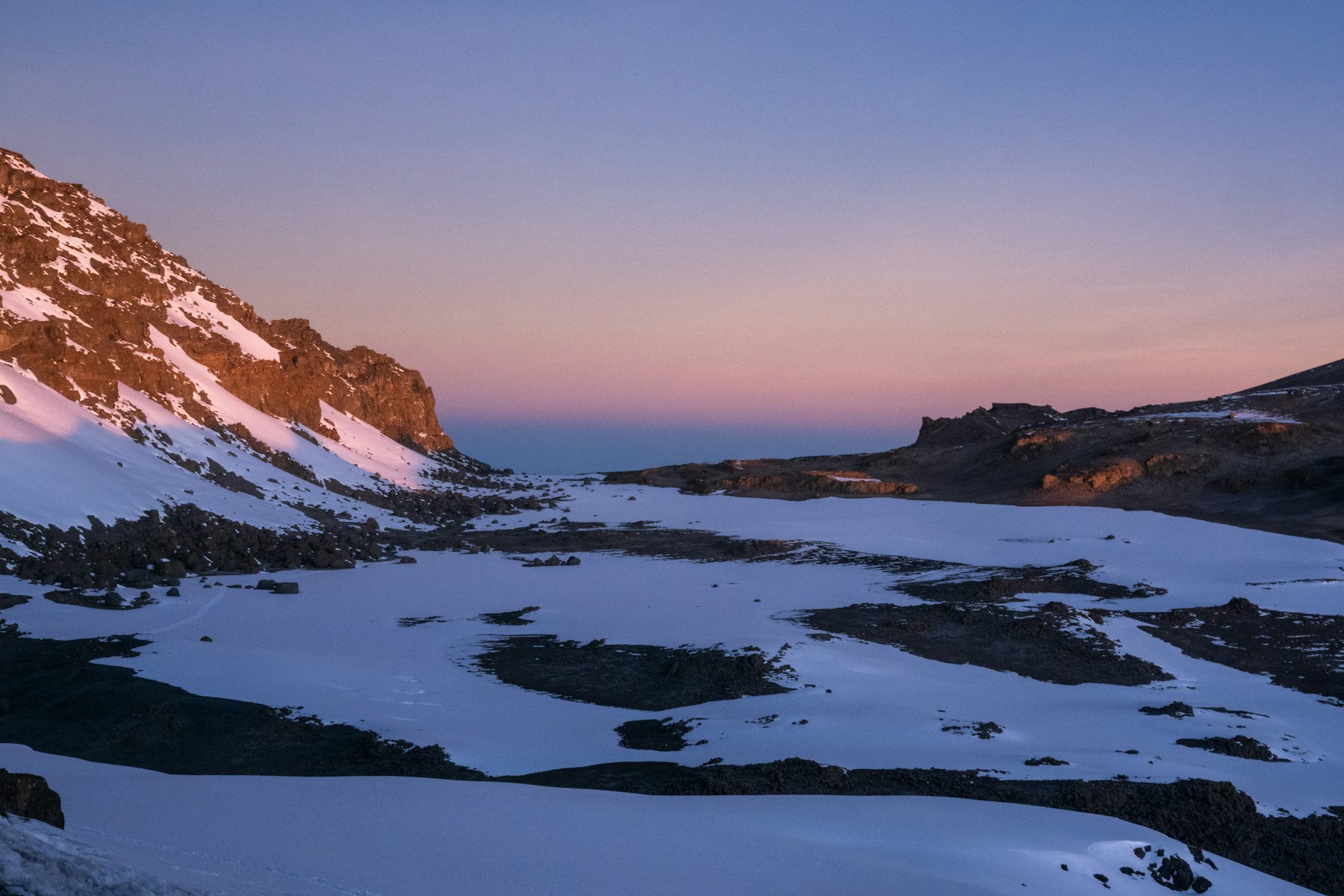
Summit night is the emotional and physical center of most Kilimanjaro itineraries. Climbers often sleep only a few hours before waking late in the evening. After a hot drink and light food, the group begins climbing in darkness. The exact line depends on route: southern routes usually head toward Stella Point, while Marangu/Rongai summit approaches may reach Gilman’s Point before continuing around the crater rim.
The pace is slow. Temperatures can be severe. Eating and drinking become chores. The repetitive rhythm of headlamp, trekking poles, boots, and breath can continue for hours. Reaching the crater rim is a major milestone, but Uhuru Peak may still require additional climbing along the rim. Sunrise can be spectacular, but the summit is not the finish line. You still have a long descent to lower camp.
Read Kilimanjaro Summit Night: What to Expect for a step-by-step guide.
The Descent
People underestimate the descent because the psychological goal is the summit. In reality, downhill mileage can be hard on knees, quadriceps, feet, and concentration. Trekking poles help. So does arriving with strong legs instead of spending every training session going uphill.
Most itineraries descend rapidly to a substantially lower sleeping altitude after summit day. The following morning, you continue through the forest to the exit gate. There are park formalities, team farewells, and transfers back to the hotel. A shower and normal bed feel extraordinary.
Safari After Kilimanjaro
Northern Tanzania makes it unusually easy to combine a mountain expedition with a world-class safari. Tarangire, Ngorongoro, and Serengeti can all fit naturally into the same trip. If you have limited time, two or three nights can give you a strong taste of the northern circuit. With four to six nights, you can include Serengeti without turning every day into a transfer.
We generally like safari after Kilimanjaro because it creates a comfortable decompression period after the physical work of the mountain. You can sit, watch wildlife, eat well, and absorb what you just did. Read Safari After Kilimanjaro for itinerary options.
Frequently Asked Questions
Do I need mountaineering experience?
Not for the standard trekking routes. Hiking experience, multi-day trekking experience, and prior altitude exposure are valuable, but technical climbing skills are not normally required.
Can a very fit person use a short itinerary?
Fitness and acclimatization are different. A strong athlete can still develop altitude illness. If you have the choice, do not shorten the itinerary merely because you are fit.
Is there cell service on Kilimanjaro?
Connectivity has expanded on portions of the mountain, but it should never be treated as guaranteed. Your operator should have appropriate communication systems for expedition operations. Keep your family expectations realistic and enjoy the rare chance to disconnect.
Do I have to camp?
On most routes, yes. Marangu is the primary exception and uses huts. The standard western and southern routes use tented camps.
What is the single most important planning decision?
Choose a good operator and a sensible itinerary. Those two decisions influence safety, pacing, acclimatization, equipment, porter welfare, food, and the overall experience.
Your Next Steps
- Compare the routes and itinerary lengths.
- Build your training plan.
- Start the packing and gear checklist.
- Learn the altitude rules before you arrive.
- See current Kilimanjaro trips being offered by Adventures With Travel.
Sources and Planning References
- Tanzania National Parks — Kilimanjaro National Park
- TANAPA — Kilimanjaro Visitor Guide
- UNESCO World Heritage Centre — Kilimanjaro National Park
- CDC Yellow Book 2026 — High-Altitude Travel and Altitude Illness
- Tanzania Immigration Department — Visa Information
- Kilimanjaro Responsible Trekking Organization
2027 Kilimanjaro Adventure — Northern Circuit
Ready to turn the research into a real climb? See dates, route, pricing, inclusions, and availability.
View this trip