
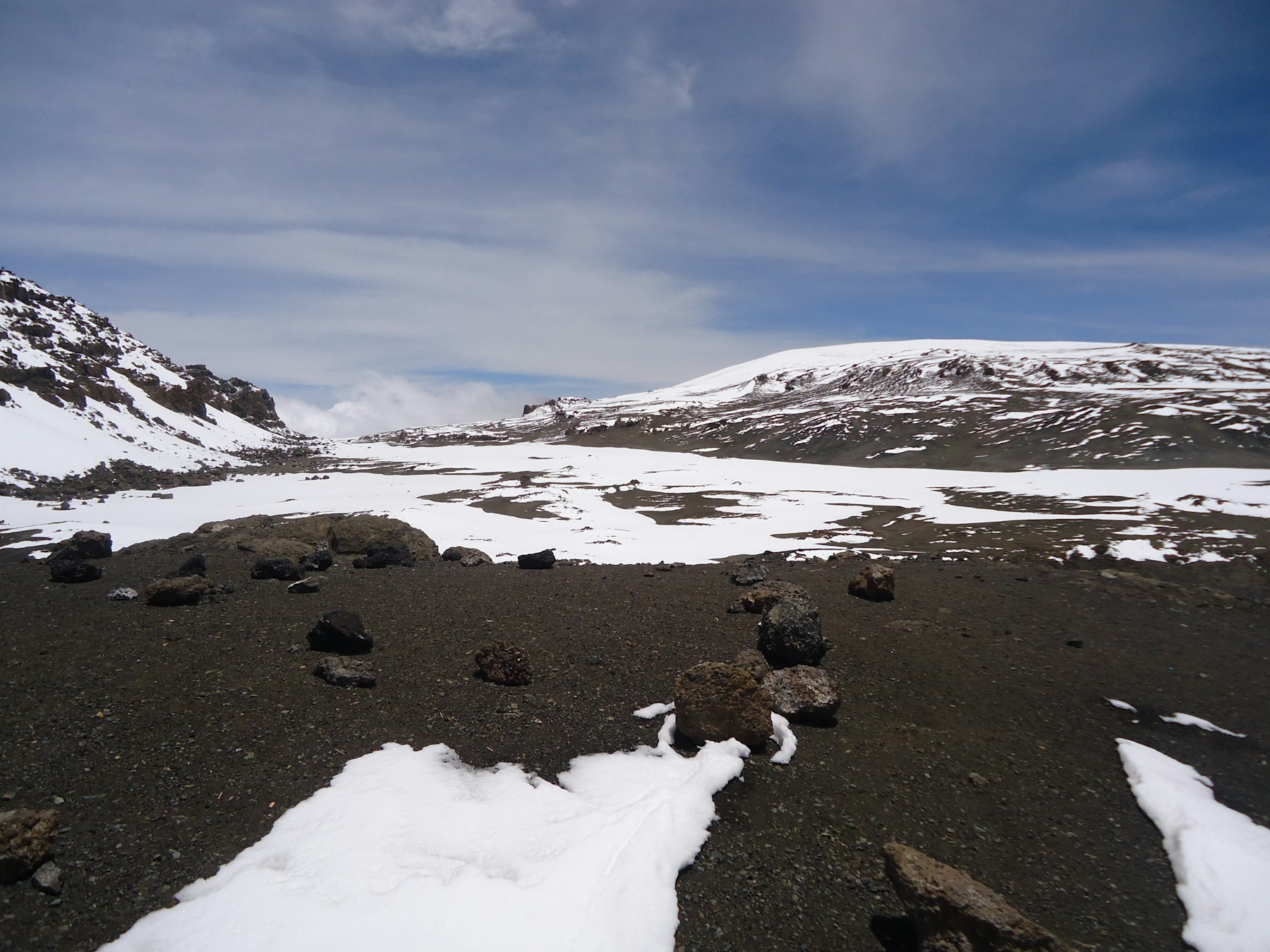
Altitude is the central uncertainty of a Kilimanjaro climb. You can train for long hiking days, test every piece of gear, and arrive in excellent condition, but the summit sits at 5,895 meters (19,341 feet)—high enough that every unacclimatized climber must take altitude seriously.
Why Altitude Matters
As elevation increases, atmospheric pressure decreases. The percentage of oxygen in the air remains roughly the same, but the pressure driving oxygen into the lungs and bloodstream falls. The CDC notes that at about 3,050 meters (10,000 feet), inspired oxygen pressure is only about 69 percent of sea-level values.
Kilimanjaro takes you far beyond that. The result is reduced exercise performance, faster breathing, disturbed sleep, lower oxygen saturation, and—in some people—altitude illness.
Acclimatization Is a Process
The body begins adjusting as soon as it is exposed to lower oxygen pressure. Breathing increases. Oxygenation gradually improves. Fluid balance and other physiological responses change. The most important early acclimatization occurs over the first several days.
Time matters. That is why a longer Kilimanjaro itinerary can be more valuable than a shorter one even when the hiking distance is similar. You are purchasing additional biological time, not merely extra sightseeing.
The CDC recommends gradual ascent and, once above 3,000 meters, generally limiting increases in sleeping altitude while allowing periodic extra acclimatization nights. Kilimanjaro itineraries do not always fit textbook ascent profiles perfectly, which makes itinerary design and guide judgment especially important.
Fitness Does Not Prevent Altitude Illness
This is one of the most important facts on the website: being fit does not mean you acclimatize better. The CDC states that training and physical fitness do not affect a traveler’s underlying risk of altitude illness.
Fitness still matters enormously. It lets you walk more efficiently, recover better, handle the cold and long days, and reach the high camps with less accumulated fatigue. But a marathon runner can develop acute mountain sickness, and a slower recreational hiker can acclimatize well.
That is why we never use fitness as an argument for choosing a faster itinerary.
Acute Mountain Sickness (AMS)
AMS is the most common altitude illness. Symptoms typically occur after ascending to a new altitude and can include:
- headache;
- unusual fatigue or weakness;
- poor appetite;
- nausea or vomiting;
- dizziness;
- disturbed sleep.
Many of those symptoms have other possible causes on a trek—dehydration, poor sleep, exhaustion, stomach illness, caffeine withdrawal, or a regular headache. That is why honest communication with experienced guides matters. A single symptom does not automatically tell you what is happening.
The Most Important Rule: Do Not Hide Symptoms
Some climbers fear that reporting a headache will “get them sent down.” That mindset is dangerous. Good guide teams need accurate information to make good decisions. Mild symptoms can be watched. Worsening symptoms can trigger a stop in ascent. Severe symptoms can trigger descent.
Your summit is not improved by pretending you feel better than you do.
When You Should Not Go Higher
CDC traveler guidance is straightforward: people with altitude illness should not ascend to a higher sleeping elevation until symptoms have resolved. If symptoms worsen while resting, descent is the safer response.
On Kilimanjaro, this principle can conflict with a fixed commercial itinerary. The mountain does not care about your scheduled summit date. A responsible operation needs procedures for holding a climber, turning a climber around, or evacuating when necessary.
HACE: A Medical Emergency
High-altitude cerebral edema (HACE) is a severe form of altitude illness involving brain swelling. Warning signs can include profound fatigue, confusion, unusual behavior, drowsiness, and loss of coordination or the inability to walk normally.
HACE is an emergency. Descent is urgent. Supplemental oxygen and appropriate medical treatment may also be used by trained teams, but they are not substitutes for getting the person lower when descent is possible.
HAPE: A Medical Emergency
High-altitude pulmonary edema (HAPE) is fluid accumulation in the lungs. Warning signs can include unusual shortness of breath, weakness, cough, reduced exercise tolerance, and—especially concerning—breathlessness at rest.
HAPE can progress quickly and is life threatening. Immediate descent and oxygen are central responses. This is one reason operator emergency systems matter more than luxury extras.
How Kilimanjaro Itineraries Help Acclimatization
A good itinerary uses time and elevation intelligently. Features that can help include:
- more total mountain days;
- gradual early elevation gain;
- acclimatization hikes above camp followed by a lower sleeping elevation;
- rest or lower-intensity periods after larger gains;
- careful pacing;
- avoiding unnecessary racing between camps.
Routes such as Lemosho, Northern Circuit, and longer versions of Machame are often chosen because they can be structured with more acclimatization time. The route name alone is not enough—compare the sleeping elevation every night.
Why “Climb High, Sleep Low” Helps
Some itineraries intentionally take you to a higher point during the day and then descend to sleep lower. A classic Kilimanjaro example is an acclimatization hike around Lava Tower on southern-route itineraries before descending to Barranco. The high exposure provides a stimulus, while the lower camp can make the overnight less stressful.
It is a useful strategy, but it does not erase overly rapid overall ascent. The entire itinerary still matters.
Pole Pole: Pacing Is a Safety Tool
Pole pole means “slowly, slowly” in Swahili. On Kilimanjaro it becomes the soundtrack of the climb. A slow pace reduces unnecessary exertion and makes it easier to eat, drink, and breathe steadily.
Trying to prove fitness by walking at sea-level hiking speed is pointless. The strongest climber in the group should often be deliberately restrained.
Hydration
Dehydration can make you feel terrible and can complicate the interpretation of headaches and fatigue. Drink regularly according to thirst, conditions, and operator guidance. At the same time, more water is not an altitude cure. Excessive forced water intake can create its own problems.
A practical approach is steady hydration, normal electrolyte and food intake, and monitoring urine and thirst without turning liters consumed into a competition.
Eating at Altitude
Appetite often falls as elevation increases. Keep eating anyway, especially carbohydrates that are easy to tolerate. Bring familiar snacks from home. Summit night is not the time to discover that the energy gel you bought tastes awful or upsets your stomach.
Sleep
Sleep commonly becomes lighter and more fragmented at altitude. Periodic breathing—cycles of deeper breathing followed by pauses—can occur. Poor sleep can be frustrating but is not by itself proof of dangerous illness.
Talk to your clinician before using sleep medications at high altitude because some sedating drugs can suppress breathing. The CDC specifically advises high-altitude travelers to avoid respiratory depressants.
Acetazolamide and Other Medications
Acetazolamide is widely used to speed acclimatization and prevent or treat AMS in appropriate travelers. It is a prescription medication with contraindications, side effects, and dosing considerations. Dexamethasone and other medications also have specific roles in altitude medicine.
Our position is simple: this website should help you know what to ask, not tell you what to take. Bring your route and sleeping-elevation plan to a clinician who understands high-altitude travel. Do that before departure, not at the hotel in Moshi.
Oxygen Saturation
Many Kilimanjaro guide teams use fingertip pulse oximeters as one part of daily checks. Oxygen saturation normally decreases with altitude, so a sea-level “normal” is not the target. A single number should not override symptoms and clinical judgment.
The trend, the climber’s condition, respiratory rate, coordination, and symptom history all matter. Do not become obsessed with comparing your number to another person’s.
Can Pre-Acclimatization Help?
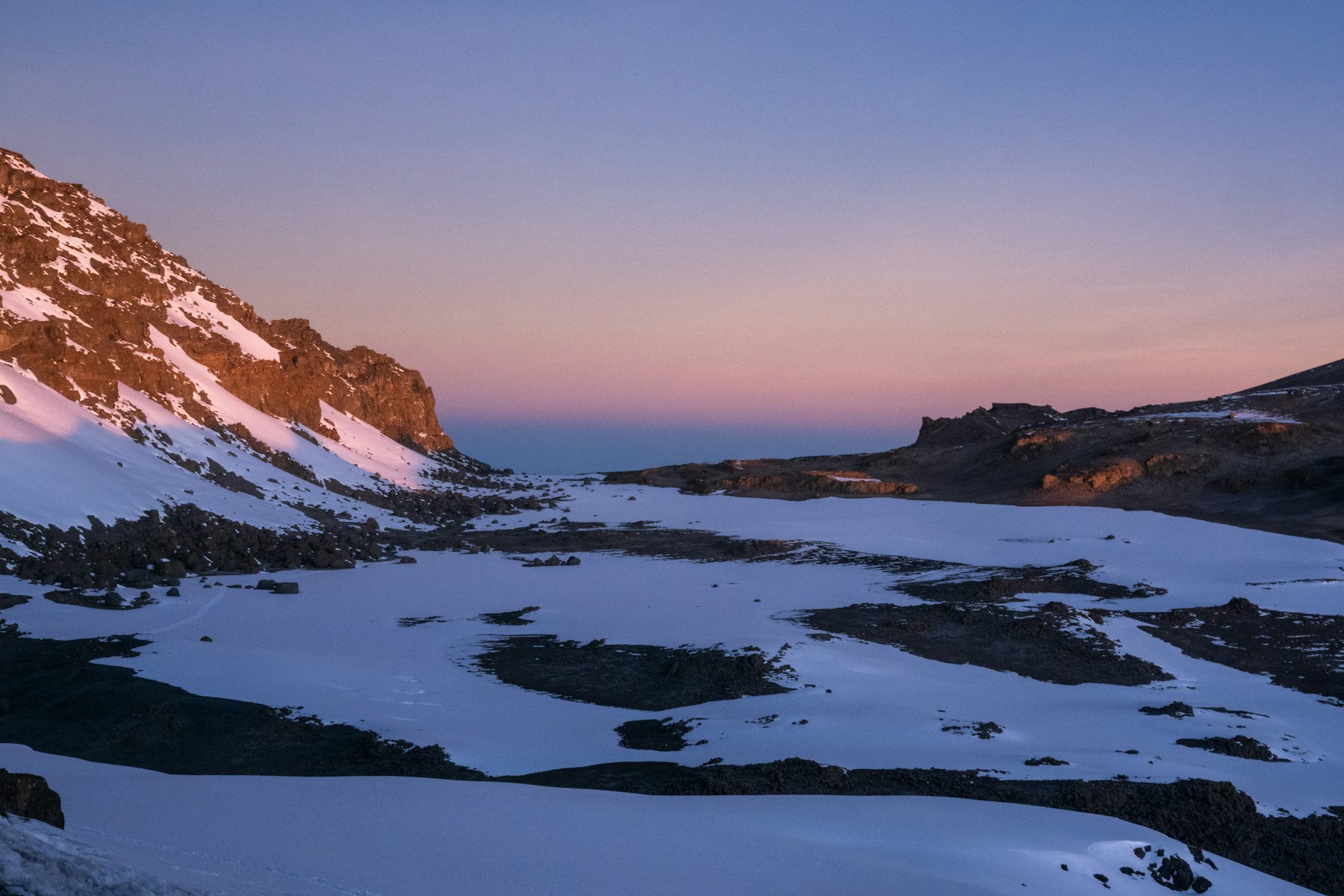
Yes, recent time at altitude can help. The CDC notes that two or more nights above roughly 2,750 meters before a trip can be useful and that exposure closer to departure is more relevant. Its Kilimanjaro-specific guidance mentions Mount Meru and other regional high-altitude options.
Pre-acclimatization is useful if it fits your life and itinerary, but we would still choose a sensible Kilimanjaro ascent schedule.
Our Acclimatization Strategy
Our planning priorities are:
- choose a longer itinerary rather than the minimum;
- walk slowly from day one;
- eat and drink consistently;
- report symptoms honestly;
- use experienced guides who conduct daily health checks;
- make medication decisions with a clinician before the trip;
- accept in advance that turning around is a legitimate expedition decision.
That last point matters. Summit fever becomes dangerous when people decide before the trip that descent equals failure. A mountain is not worth permanent injury.
Questions to Ask Your Operator
- How are clients assessed each morning and evening?
- Do guides carry pulse oximeters?
- Is supplemental oxygen carried? In what quantity?
- How are guides trained to recognize AMS, HACE and HAPE?
- What communication system is used?
- What happens if one person in a group must descend?
- How is evacuation coordinated?
- What is the nearest medical facility used by the company?
- How many guides are available if the group must split?
Altitude Myths We Would Ignore
“I am very fit, so I’ll be fine.” Fitness does not predict susceptibility.
“A headache is normal, so never mention it.” Report symptoms. Context matters.
“Drinking huge amounts of water prevents AMS.” Good hydration is important; forced overhydration is not a cure.
“Oxygen lets you keep climbing no matter what.” Oxygen can be part of treatment, but severe illness can require descent.
“If the group keeps going, I should too.” Individual symptoms and safety decisions come first.
Next Steps
Pair this page with Routes Compared and Summit Night. The best altitude plan begins when you choose your route and itinerary—not when symptoms appear.
Sources and Planning References
- CDC Yellow Book 2026 — High-Altitude Travel and Altitude Illness
- CDC Travelers’ Health — Travel to High Altitudes
- CDC Yellow Book 2026 — African Safaris and Climbing Expeditions
- TANAPA — Kilimanjaro Visitor Guide
2027 Kilimanjaro Adventure — Northern Circuit
Ready to turn the research into a real climb? See dates, route, pricing, inclusions, and availability.
View this trip