
I thought reaching Uhuru Peak would feel like victory. It did—but not in the way I expected.
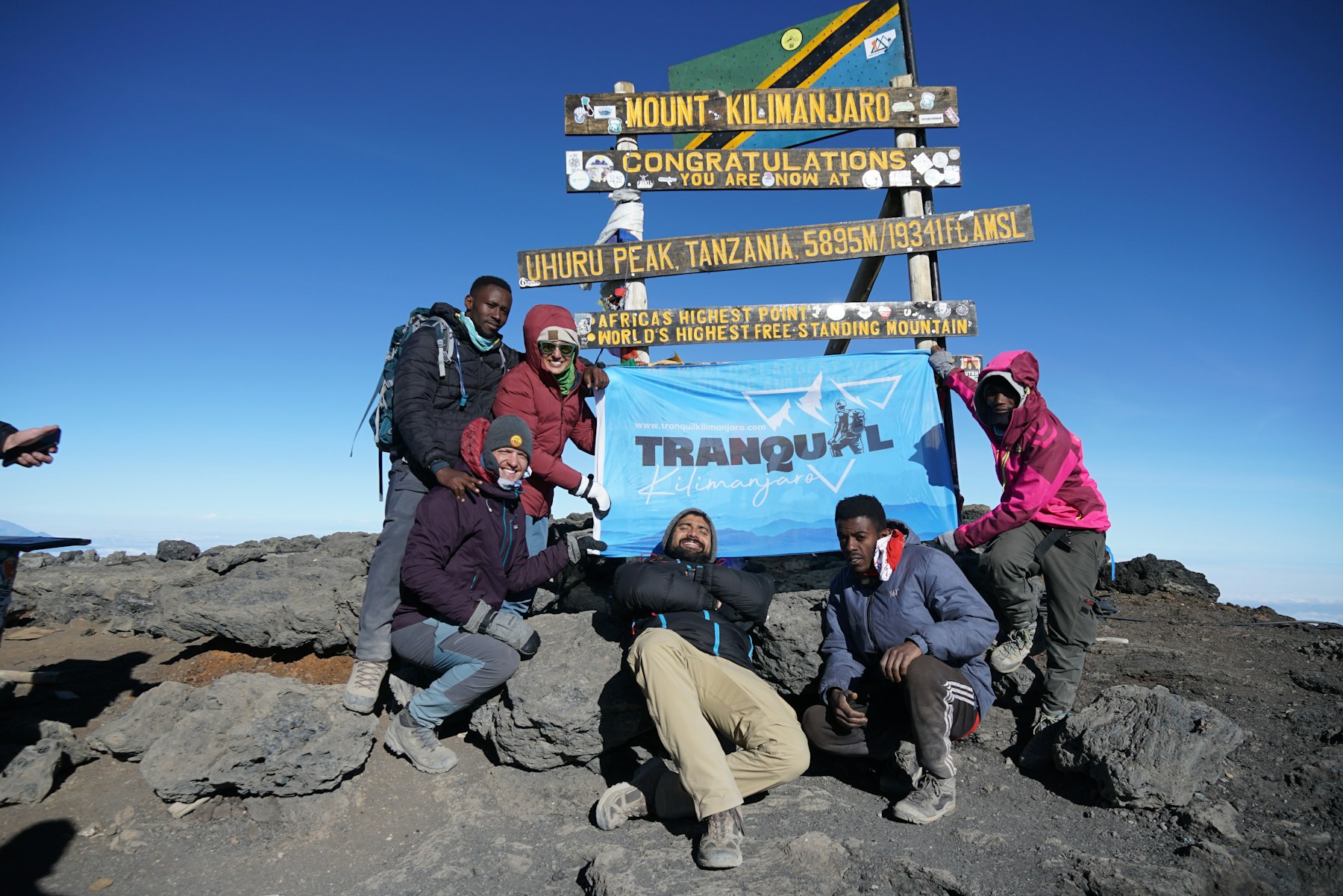
I had imagined the moment for months. The famous sign. The photographs. The highest point in Africa at 19,340 feet.
In my imagination I arrived strong, threw my arms into the air and felt a clean surge of triumph.
Reality was messier.
I was exhausted.
The Walk From Gilman’s
The crater rim was breathtaking. Sunrise lit the glaciers. The volcanic landscape looked impossible. None of that made walking easy.
We moved slowly from Gilman’s Point toward Uhuru. Every slight rise felt larger than it was.
Elena had become quiet. Sarah walked just behind Joseph. Marcus muttered “pole pole” to himself every few steps like a metronome.
I focused on breathing.
When the Uhuru sign finally appeared, I stopped.
There it was.
An object I had seen in thousands of photographs, except now there was no screen between us.
I had walked here.
The Moment
Emotion arrived all at once—relief, gratitude, disbelief, pride and fatigue.
David reached the sign and just stood there. Then he said quietly, “My dad would have loved this.” Nobody asked him to explain.
Sarah hugged him.
Marcus looked at the summit board and said, “I have no clever comment.” For once, that was true.
We took group photographs and individual photographs. Gloves came off briefly, then went right back on. Someone’s camera battery died almost immediately in the cold. Ben produced a spare power bank, because apparently Ben carried a solution to every possible problem.
I tried to record details beyond the photographs: the color of the sky, the strange texture of ice and volcanic rock, the sound of people congratulating each other, the fact that my breathing never felt completely relaxed.
We Did Not Conquer Anything
Standing there, the phrase “conquering Kilimanjaro” suddenly felt ridiculous.
The mountain was not conquered.
Kilimanjaro did not care that we were there.
We had been given enough good conditions, enough acclimatization, enough support, enough strength and enough luck to stand there briefly.
That made the experience feel bigger, not smaller.
The Summit Is Not the Finish
Joseph reminded us we could not stay long.
I knew that intellectually. My body had not fully accepted it.
We still had to descend to the crater rim, continue down the mountain, stop at camp and then descend farther to Millennium Camp.
Leaving Uhuru was unexpectedly emotional. For months, the summit had always been ahead of us. Suddenly it was behind us.
The scree descent was hard on tired legs. At a stop lower down, warm juice and snacks tasted extraordinary. My chocolate had softened again. Small miracle.
At Barafu, one of the crew members handed me a cup of tea. I remember holding it in both hands and thinking that no expensive restaurant had ever given me anything I wanted more.
What the Summit Gave Me
By the time we reached Millennium Camp, I felt emptied out.
Taking off my boots felt ceremonial. Sitting down felt luxurious. Food required effort, but I ate.
Someone asked how I felt.
I did not have a useful answer.
Happy was not enough.
Tired was not enough.
Proud was not enough.
I had expected the summit to prove something dramatic about toughness.
Instead, the climb taught me quieter things.
I could keep moving when uncomfortable.
I could ask for help.
Slow movement could take me astonishingly far.
Huge goals were made of small actions.
And standing on top of a mountain did not make me feel bigger.
It made me feel grateful.
2027 Kilimanjaro Adventure — Northern Circuit
Ready to turn the research into a real climb? See dates, route, pricing, inclusions, and availability.
View this trip