
Kibo Hut is where the talking stopped.
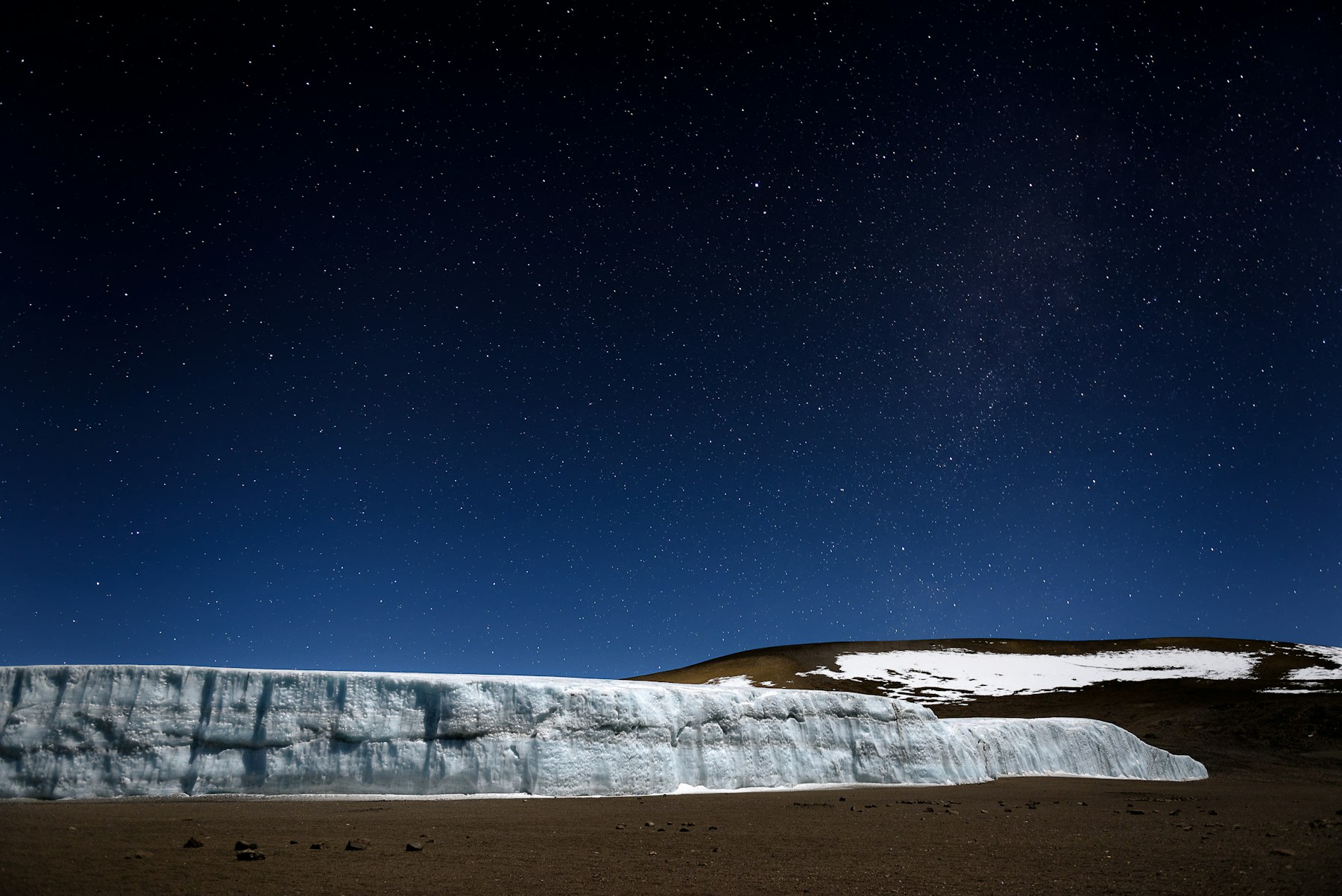
We could see Kibo for much of the hike across the Saddle. That made it harder. Our final high camp before the summit sat at roughly 15,510 feet, beneath a mountain that looked far too large to climb in the dark.
The group moved quietly. Nobody needed to say what tonight meant.
Dinner. A little sleep if possible. Wake before midnight. Dress. Drink tea. Turn on headlamps.
Then up.
Crossing the Saddle
The Saddle between Mawenzi and Kibo was one of the starkest landscapes of the trip—open alpine desert framed by two volcanic giants.
Talking and walking at the same time felt increasingly optional.
Sarah asked me how I was doing.
“Good.”
Then we walked twenty minutes without another sentence.
At this elevation, silence was efficient.
The Summit Gear Ritual
When we reached Kibo, lunch and an early dinner blurred together with the most careful equipment check of the expedition.
I spread everything in the tent.
Base layer. Midlayer. Insulated jacket. Shell. Warm hat. Balaclava. Liner gloves. Heavy gloves. Headlamp. Spare batteries. Snacks. Camera. Water.
David filled his bottles with warm water and tucked them into insulated sleeves. He reminded us that we had mocked his hydration insulation on day one.
“The defense rests,” he said.
Marcus tried to stuff too many snacks into one jacket pocket and tore the corner of a wrapper, showering tiny bits of granola over his sleeping bag.
“Wildlife attractant,” Elena said.
“At 15,500 feet?”
“Very athletic mice.”
We were laughing, but the nervous energy was obvious.
Eating Because We Had To
Dinner was simple and warm—soup, pasta, vegetables and tea. I ate because summit night demanded fuel, not because I was hungry.
That was one of the stranger parts of the climb. At home I had trained myself to think of food as performance fuel. At Kibo, every bite required a small act of discipline.
Joseph walked through the dining area checking on everyone.
“Tonight you do not need to be fast,” he told us. “You need to be warm, honest and patient.”
That was the entire summit plan in one sentence.
Trying to Sleep
After dinner we crawled into our tents. “Sleep” is generous. I closed my eyes. Checked the time. Opened them. Heard wind. Heard a zipper. Heard someone cough. Thought about the summit. Tried not to think about the summit.
Fear at altitude did not feel dramatic. Mine felt quiet.
What if I could not do it?
What if I became sick?
What if I had to turn around?
I had told myself many times that reaching the summit was not worth risking my health. I still believed it. I also had to admit how badly I wanted Uhuru Peak.
Those truths had to coexist.
Want it badly.
Be willing to stop.
Time to Go
Eventually someone outside said it was time.
I sat up, pulled on layers, laced boots and put the headlamp around my neck. My hands shook slightly. Cold or nerves? Probably both.
My gloves felt bulkier than they had at home. My summit socks suddenly felt very warm. The insulated bottle slid into the pack exactly where I had practiced placing it.
Outside, the mountain was black.
One headlamp switched on.
Then another.
Then another.
A line of tiny lights formed in the darkness.
Sarah stood beside me and exhaled.
“Well,” she said, “this is the part we came for.”
There was no speech. No countdown.
I tightened my pack, picked up my poles and followed the lights uphill.
2027 Kilimanjaro Adventure — Northern Circuit
Ready to turn the research into a real climb? See dates, route, pricing, inclusions, and availability.
View this trip