
We had talked about Lava Tower so many times before the trip that it almost felt like a test we had already taken. It was not.
Today was the day the altitude stopped being a number and became a physical sensation.
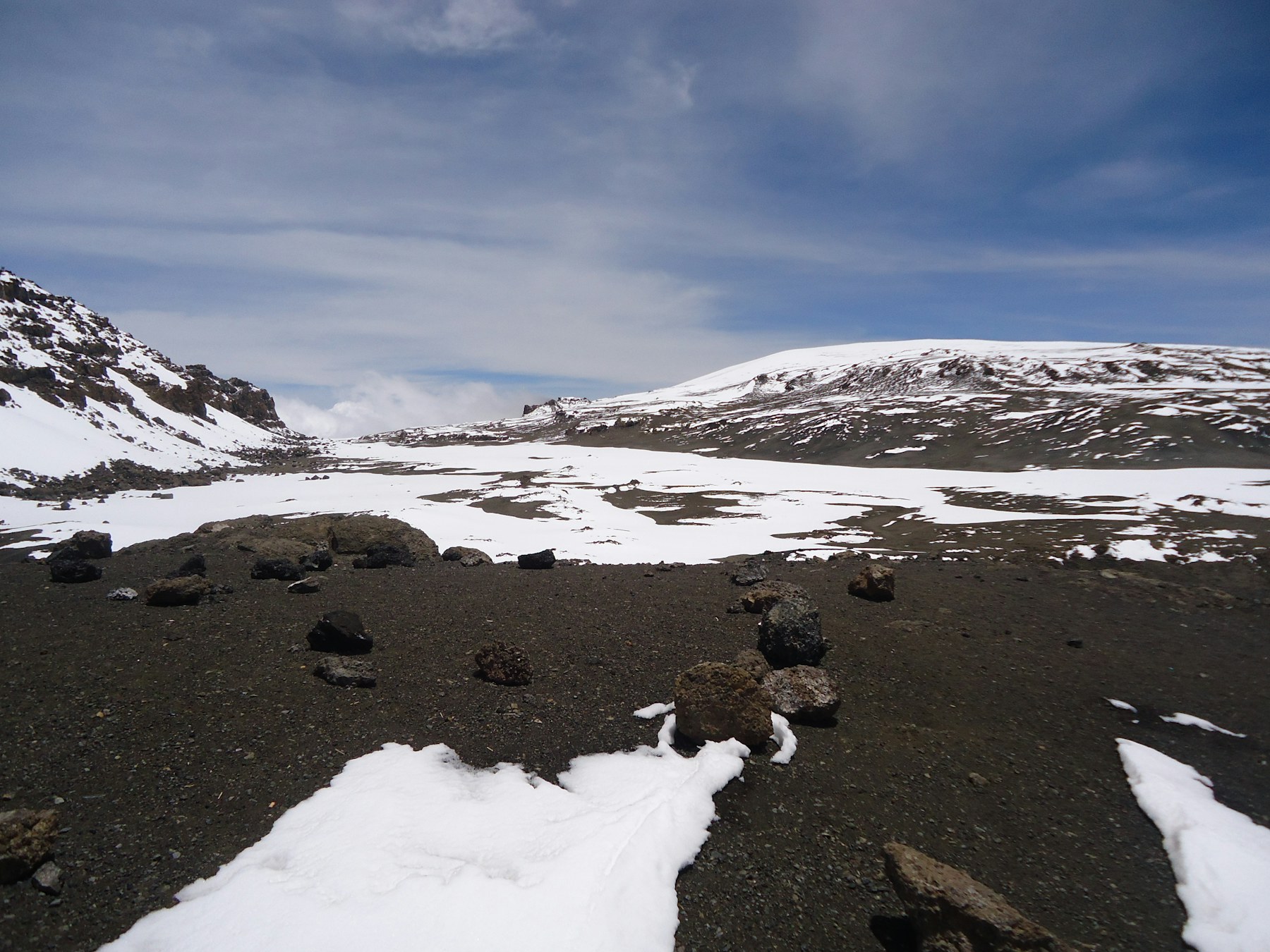
We left Shira 2 and climbed toward increasingly barren terrain. Vegetation thinned. Rock and dust took over. The sky felt closer. Conversation gradually disappeared.
I could still walk, but every movement required more oxygen than the air seemed willing to provide.
The First Headache
Somewhere on the approach to Lava Tower, I felt the beginning of a headache. Mild, but unmistakable.
My first instinct was to evaluate it privately. My second was to remember everything we had been told about not hiding symptoms.
I told Joseph.
He asked whether I was nauseated. No. Dizzy? No. Trouble walking straight? No. Appetite? Still there. He told me to keep sipping water and stay honest about any change.
Elena overheard and handed me one of her ginger chews.
“This solves headaches?” I asked.
“No,” she said. “But it gives you something else to think about.”
It worked for at least thirty seconds.
Lunch at Roughly 15,000 Feet
At Lava Tower we stopped for a hot lunch. The idea of sitting down sounded wonderful until we sat down and got cold. Jackets appeared immediately.
Lunch was soup, bread, potatoes and a warm main dish. My body understood that calories were necessary even if my appetite had become less enthusiastic. So I ate deliberately.
Marcus stared into his soup for a moment and said, “This may be the highest bowl of soup I ever eat.”
David replied, “Please do not turn this into a competition.”
The joking helped, but everyone was quieter. We were taking inventory.
This was the question of the day: Can my body function here?
Gear That Suddenly Mattered
Several pieces of equipment that had seemed excessive in Moshi became important all at once. My lightweight gloves came out. The wind shell stayed on. Lip balm became essential. David’s insulated hydration setup—mocked in the warm rainforest—no longer looked ridiculous.
Ben discovered that one of his water bottles had been sitting against the cold side of his pack and was noticeably colder than the other. “Summit-night lesson learned early,” he said, moving it deeper into the pack.
The mountain was testing systems as much as legs.
Climb High, Sleep Low
Then came the beautiful part.
We descended.
After climbing to roughly 15,000 feet, the route dropped toward Moir Hut at approximately 13,780 feet. I had never been happier to lose elevation.
With every few hundred feet, I felt slightly better. The headache eased. Breathing became less deliberate. The world seemed friendlier.
That was when “climb high, sleep low” stopped sounding like a phrase in a guidebook and started feeling like a gift.
Progress does not always look like progress.
Sometimes the smart path toward the summit is downhill.
Moir Hut
Moir felt remote and exposed. Wind moved through camp, and we took extra care with tent doors. Sarah learned why the guides kept telling us to zip them immediately when a gust inflated one side of her tent like a sail.
“I almost donated my sleeping bag to Kenya,” she said after wrestling the vestibule closed.
Tea was followed by popcorn and biscuits. Dinner was hearty—soup, rice and a stew—which mattered because the day had taken more from us than the mileage suggested.
That evening everyone talked more openly about symptoms.
A little headache.
No appetite.
Tired.
Cold.
Fine.
Not sleeping well.
Nobody needed to perform toughness.
Fifteen thousand feet had humbled all of us in slightly different ways.
I went to sleep tired and relieved. We had not reached a summit. There was no dramatic sign to photograph.
But we had climbed high enough to ask our bodies a serious question, listened to the answer and descended intelligently.
That felt like a real achievement.
2027 Kilimanjaro Adventure — Northern Circuit
Ready to turn the research into a real climb? See dates, route, pricing, inclusions, and availability.
View this trip