
There is a moment at the beginning of a big adventure when preparation ends. For me, it happened at Lemosho Gate.
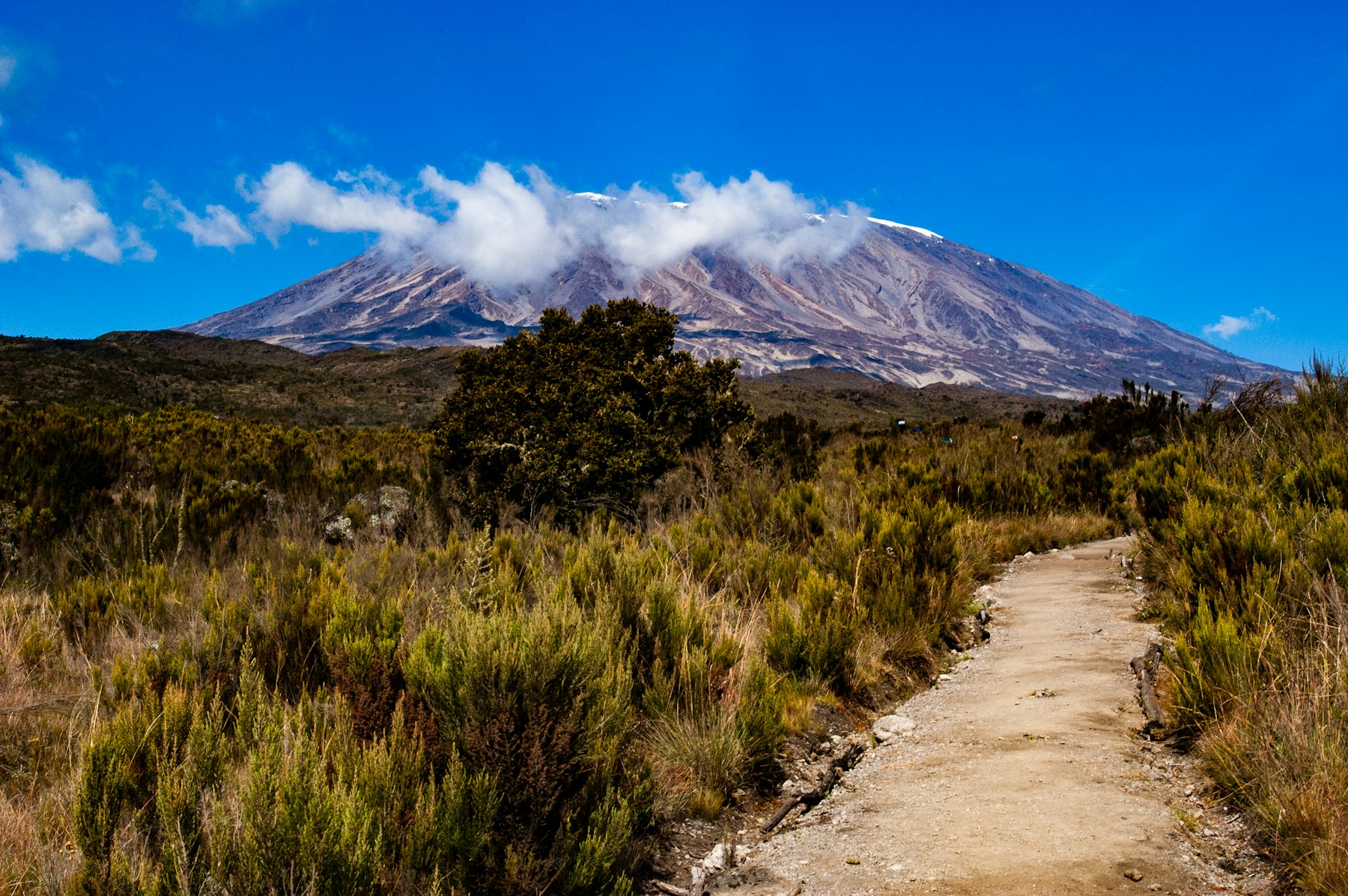
Until then, we were still travelers. We had driven from Moshi, watched the landscape change outside the vehicle, talked nervously, checked packs and taken the obligatory “clean boots” pictures. At the gate there were forms, duffels, porters sorting loads and a lot of purposeful activity I did not fully understand.
Then I tightened my hip belt, picked up my trekking poles and started walking.
That was it. We were climbing Kilimanjaro.
Rainforest Instead of Snow
The first day looked nothing like the mountain I had imagined for months. There was no snow, no alpine desert and no dramatic summit panorama. We were surrounded by wet green forest. Ferns pushed toward the trail. The air was warm enough that I removed my fleece within twenty minutes and stuffed it into the top of my pack.
Sarah had the opposite problem. She had clipped her rain shell to the outside of her pack for easy access, then snagged it on a branch less than an hour into the hike. The shell survived. Her pride took a small hit.
“Great,” she said, looking at the muddy sleeve. “Day one and I have already achieved the authentic expedition look.”
The pace was deliberately slow. Slower than I normally hike. At first my body kept wanting to speed up. Marcus whispered, “My watch thinks we have stopped.” Joseph heard him and laughed.
“Let the watch be confused,” he said. “Your lungs will understand later.”
That sentence stayed with me.
Lunch, Water and the New Rhythm
We stopped for lunch in the forest and ate sandwiches, fruit and a simple packed meal that tasted better than it had any right to. The important thing was not culinary sophistication; it was eating before anyone became depleted. Our guides kept reminding us to drink. Water became part of the day’s rhythm: walk, sip, adjust a layer, walk again.
David had brought an insulated hydration tube cover that he had researched obsessively. On day one, in the warm forest, it looked like absurd overkill. He defended it anyway. “Talk to me on summit night,” he said. We would.
As the hours passed, I stopped treating the day like a normal hike that needed to be completed efficiently. We had roughly eight more mountain days ahead. Nobody cared if I could reach camp twenty minutes earlier. The objective was to arrive with enough energy to do it again tomorrow.
Mti Mkubwa
Mti Mkubwa Camp appeared almost sooner than I expected. Our mountain crew had arrived ahead of us, and tents were already taking shape among the trees. That was my first real lesson in how much work happens around the climbers. We carried small daypacks. The crew carried the equipment that made the expedition possible.
I dropped my pack and immediately made a rookie mistake: I put my trekking poles on the ground beside the tent instead of under the vestibule. Ten minutes later a short shower rolled through. The poles were fine, but the grips were soaked. Marcus looked at them and said, “Excellent. We have our first gear test result.”
Tea and popcorn appeared before dinner. I had heard that popcorn was common at Kilimanjaro camps, but I had not understood how satisfying warm, salty food would feel after hiking. Dinner was soup followed by a simple plate of rice, vegetables and meat. Nobody complained about the menu. We were hungry.
The conversation at dinner was lighter than it had been in Moshi. We had started. That uncertainty was gone.
The First Night in a Tent
My shoulders felt good. My feet felt good. No hotspots. No headache. No altitude symptoms. Day one had gone well.
And yet Uhuru Peak was still more than 10,000 vertical feet above us.
I decided not to think about that.
Instead, I concentrated on small tasks: organize tomorrow’s clothes, keep the headlamp in the same pocket, refill water, check my feet, put the rain shell somewhere smarter and zip everything before darkness settled in.
Lying in my sleeping bag, I heard voices, tent zippers, footsteps and forest sounds beyond camp. My phone barely mattered. Email felt like something from another life.
Everything had become very simple.
Eat. Drink. Walk. Rest. Repeat.
Before I fell asleep, I realized I was smiling.
I had completed my first day on Kilimanjaro.
2027 Kilimanjaro Adventure — Northern Circuit
Ready to turn the research into a real climb? See dates, route, pricing, inclusions, and availability.
View this trip